Monolith vs. Microservices: Choosing the Right Architecture for Scale
Monolith vs. Microservices: Choosing the Right Architecture for Scale
The last decade has seen a boom in application usage, achieving levels of scalability previously undreamed of. Cheap computing and ease of access mean brands now have more users than ever. However, this growth brings a fundamental question: How do we structure our software to handle this load?
The Monolith: Simple but Rigid
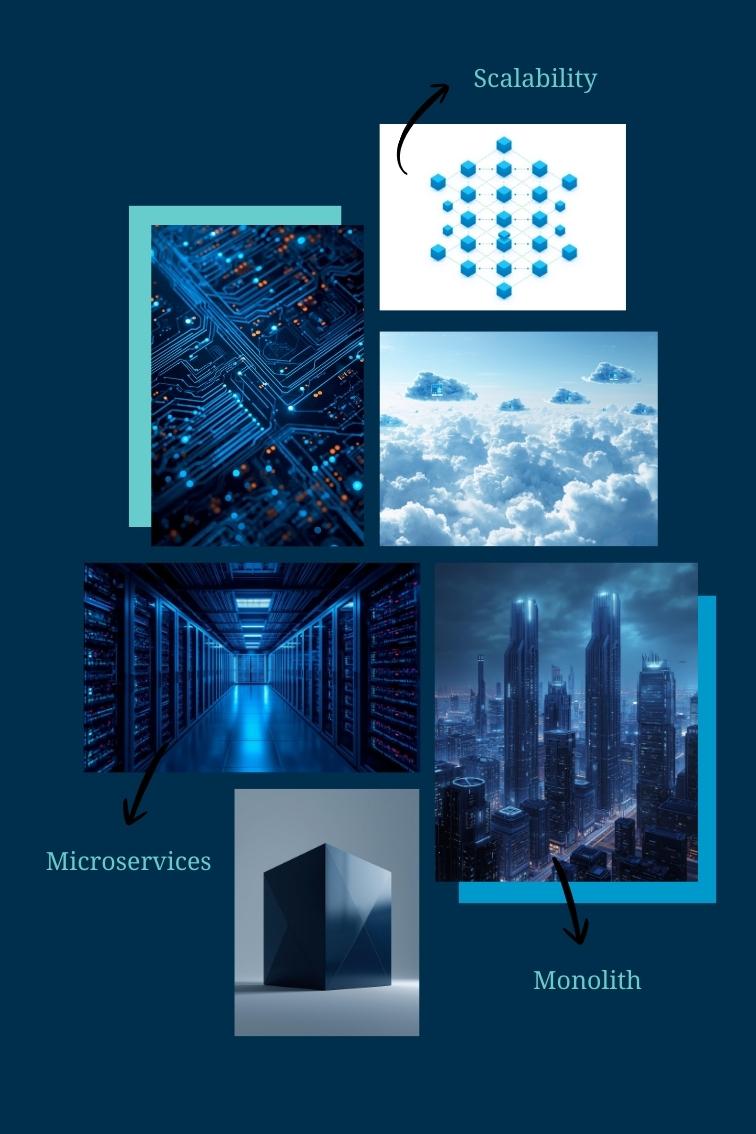
In a Monolithic architecture, the entire application—frontend, backend, and database logic—is packaged and deployed as a single unit.
- Pros: Simple to develop, test, and deploy initially. No network latency between components.
- Cons: Becomes a "ball of mud" as it grows. A single bug can take down the entire system. Scaling requires duplicating the whole application, even if only one part is under load. A single fix requires re-installing the entire application.
Microservices: Agile and Scalable
In a Microservices architecture, the application is broken into small, independent services that communicate over a network (usually HTTP or message brokers). Each service is responsible for a specific business capability.
- Pros: Services can be developed, deployed, and scaled independently. You can use the best tool for each job (e.g., Python for AI, Java for high-performance transactions). It supports team autonomy and rapid feature iteration.
- Cons: Increased operational complexity. Requires robust CI/CD, service discovery, and monitoring. Network latency and data consistency across services become challenges.
Making the Choice
At Microquants, we don't believe in "one size fits all."
- Start Monolithic if you are a small team validating a new idea. It's faster to ship.
- Migrate to Microservices when your team grows, or when specific parts of your application have vastly different scaling needs.
The digital world is moving toward a "micro-digital" environment where small events and rapid changes are the focus. Microservices support the three pillars of Agile: adaptation, inspection, and transparency.
Whether you are building a new MVP or modernizing a legacy system, the goal is the same: deliver value fast without compromising on stability.